CH15: Security Governance, Compliance, and Risk Communication
Introduction
Cybersecurity exists within a broader context of organizational governance, regulatory requirements, and business risk. A technically sound security program that fails to align with organizational governance and regulatory requirements is incomplete. Conversely, an organization that achieves perfect compliance but lacks genuine security remains vulnerable. This chapter addresses the policy and governance structures that formalize security requirements, the regulatory frameworks that constrain security decisions, the distinction between compliance and security, and the communication strategies that translate technical security findings into business language that executives and boards understand. Effective security leadership requires mastery of both technical security and the organizational, legal, and business contexts in which security operates.
Learning Objectives
After completing this chapter, you will be able to:
- Design security governance structures using policies, standards, procedures, guidelines, and baselines with concrete examples across different organizational contexts.
- Apply regulatory frameworks (GDPR, HIPAA, PCI DSS, SOX, FISMA) to specific organizational scenarios and explain their requirements in detail.
- Distinguish between compliance and security, explaining why organizations can be compliant but insecure.
- Communicate technical security risks to non-technical stakeholders using quantification and business impact language.
- Evaluate third-party security controls and vendor risk through assessment frameworks and SLA design.
15.1 Security Governance Structures
Governance establishes the rules and processes that guide an organization's security program. Governance structures create organizational alignment, consistency, and accountability. Without governance structure, security decisions are made ad-hoc, inconsistently, and without organizational alignment.
Governance Hierarchy: Policies, Standards, Procedures, Guidelines, and Baselines
Security governance follows a hierarchy where each level provides increasing specificity:
Policies are high-level statements of organizational direction and intent, typically 1-2 pages, approved by executive leadership or the board. Policies establish "what" the organization will do. Example policy:
POLICY: Data Encryption at Rest
STATEMENT: All data at rest classified as Confidential or higher
must be encrypted with AES-256 or cryptographically equivalent.
RATIONALE: Protect sensitive data from unauthorized access if
storage devices are lost or stolen.
APPROVED BY: Chief Information Security Officer
EFFECTIVE DATE: January 1, 2024
This policy establishes the requirement but not the technical details.
Standards specify the technical or process requirements that implement a policy, typically 5-10 pages, approved by the CISO or technical governance committee. Standards answer "how" and "with what technology." Example standard implementing the encryption policy:
STANDARD: Encryption Implementation - Data at Rest
APPLIES TO: All databases, file servers, backup systems
REQUIREMENT 1: All databases shall implement transparent data
encryption (TDE) or equivalent with AES-256
REQUIREMENT 2: Encryption keys shall be managed in a Hardware
Security Module (HSM) or cloud key management service
REQUIREMENT 3: All backups shall be encrypted with AES-256
before being written to storage
REQUIREMENT 4: Encryption key rotation shall occur annually
(minimum)
STANDARD GUIDANCE: Microsoft SQL Server uses TDE; Oracle Database
uses Transparent Data Encryption; PostgreSQL uses pgcrypto
This standard specifies technology and approaches but not step-by-step implementation.
Procedures are detailed step-by-step instructions for executing a standard, typically 10-20 pages, written and owned by technical teams. Procedures answer "exactly how do we do this?" Example procedure for implementing TDE in SQL Server:
PROCEDURE: Enable Transparent Data Encryption in Microsoft SQL Server

PREREQUISITE: Database Administrator access, HSM certificate installed

STEPS:
1. Create a master key (see procedure: "Create Database Master Key")
2. Create a certificate backed by the master key
3. In SQL Server Management Studio, right-click database properties
4. Select "Transparent Data Encryption" option
5. Select the certificate created in step 2
6. Enable encryption and wait for scan to complete (30-60 minutes
   depending on database size)
7. Verify encryption status: SELECT encryption_state FROM
   sys.dm_database_encryption_keys

ROLLBACK: Disable TDE using same interface, re-encrypt with older key

TESTING: Verify query performance remains acceptable after enabling TDE
This procedure provides exact steps a DBA can follow to implement encryption.
Guidelines are recommendations that may be adapted to specific contexts, typically 2-5 pages, approved by governance committee but more flexible than standards. Guidelines answer "consider doing this, but use judgment." Example guideline:
GUIDELINE: Encryption in Transit Best Practices
While our standard requires TLS 1.2 minimum for data in transit,
consider implementing TLS 1.3 for new projects where feasible.
Organizations should implement HSTS headers to enforce encrypted
connections. Consider certificate pinning for high-security applications
that communicate with specific servers.
[This is advisory, not mandatory, allowing flexibility while
providing guidance]
Guidelines allow flexibility while establishing organizational direction.
Security Baselines define minimum configurations that all systems must meet. Baselines are often derived from industry standards such as the Center for Internet Security (CIS) Benchmarks. Example baseline:
BASELINE: Windows 10 Security Configuration
APPLIES TO: All Windows 10 workstations
CONTROLS:
- Windows Defender enabled (antivirus)
- Windows Firewall enabled and configured
- Windows Update automatic installation enabled
- Weak ciphers disabled (RC4, DES)
- UAC (User Access Control) enabled
- Unnecessary services disabled (Telnet, Remote Desktop unless required)
- NTFS encryption enabled on sensitive folders
- Automatic lock after 5 minutes of inactivity

VERIFICATION: Compliance scanning tools verify all systems meet baseline
REMEDIATION: Non-compliant systems are updated automatically or reported
to management for remediation
Baselines ensure minimum security across all systems of a particular type.
Governance Example Across Multiple Levels
A retail organization with PCI DSS compliance requirements might have:
- Policy: "All cardholder data must be encrypted in transit and at rest"
- Standard: "Payment card data shall be encrypted using AES-256; encryption keys shall be managed in a Hardware Security Module"
- Procedure: "Step-by-step instructions for implementing AES-256 encryption in the payment processing application"
- Guideline: "Consider implementing end-to-end encryption from point-of-sale to payment processor"
- Baseline: "All point-of-sale terminals must use approved payment application versions, have security patches current, and implement PCI-compliant encryption"
Each level provides increasing specificity while maintaining alignment with organizational policy.
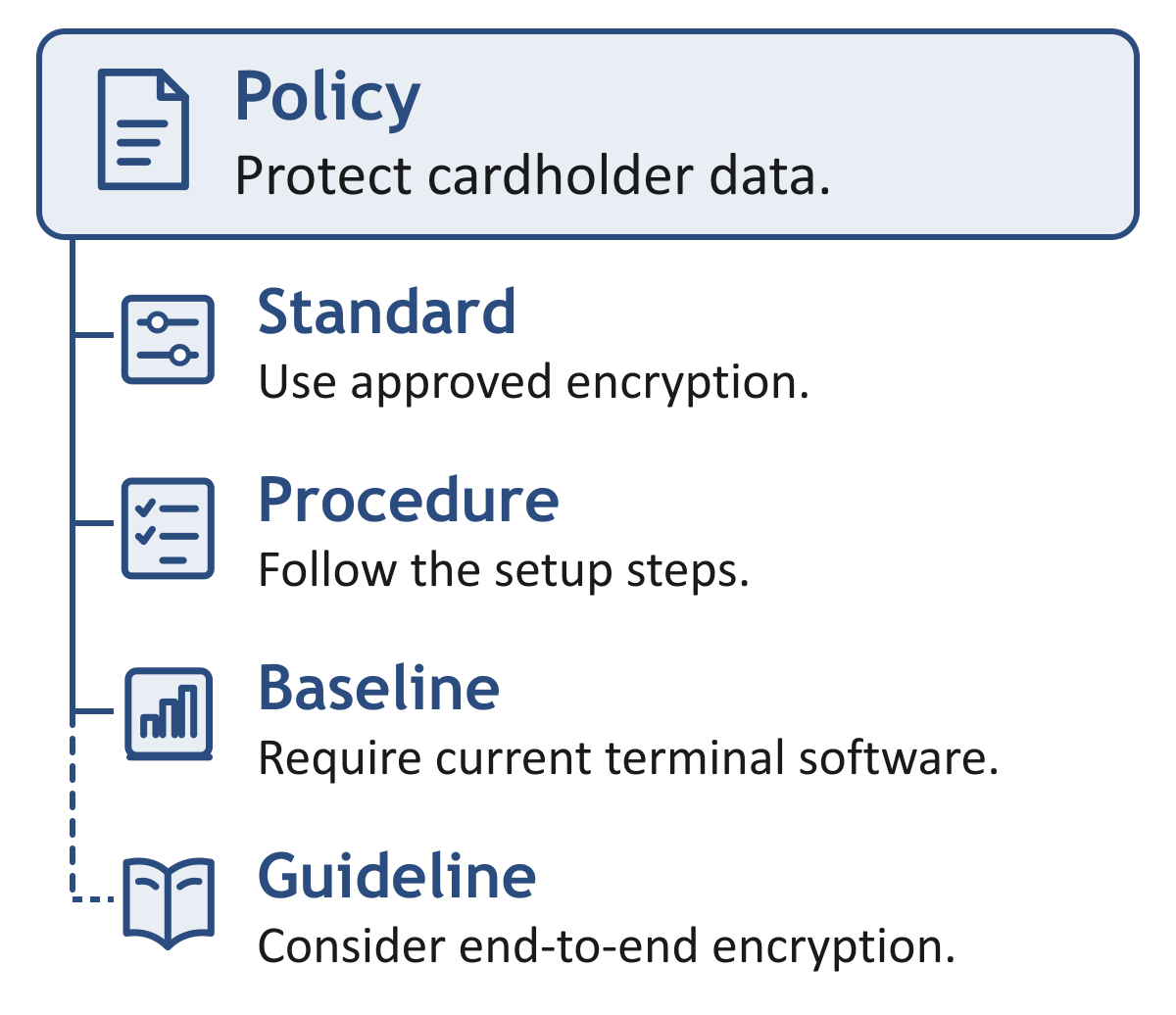
Figure 15.1: A retailer can trace each payment-system document back to the policy that requires staff to protect cardholder data.
Text description of Figure 15.1
The policy sets the goal. The standard requires approved encryption, and the procedure gives staff the steps to set it up. The baseline requires current software on payment terminals. The guideline invites staff to consider end-to-end encryption, which protects data along the path from the terminal to the processor. The dashed branch marks this advice as optional.
15.2 Regulatory Frameworks in Detail
Depending on industry and geographic location, organizations must comply with numerous regulatory frameworks. Non-compliance can result in substantial fines, loss of operating license, and executive liability.
GDPR (General Data Protection Regulation)
The General Data Protection Regulation (GDPR) applies to any organization that processes data of European Union residents, regardless of where the organization is located. A US company processing data of an EU customer must comply with GDPR.
Key requirements include:
- Right to access: Individuals can request copies of their personal data. Organizations must provide the data within 30 days.
- Right to be forgotten: Individuals can request data deletion. Organizations must delete personal data unless legal reasons justify retention.
- Right to portability: Individuals can request data in machine-readable format for transfer to other organizations.
- Data protection by design: Privacy considerations must be part of system design from inception, not added later.
- Data protection impact assessments: High-risk processing activities require documentation of potential impacts and mitigation controls.
- Privacy officer requirement: Organizations must designate a Data Protection Officer (DPO) responsible for GDPR compliance.
- Mandatory breach notification: Data breaches affecting personal data must be reported to the relevant data protection authority within 72 hours. If the breach is likely to result in high risk to individuals, affected individuals must also be notified.
Financial penalties: Fines up to EUR 10,000,000 or 2% of annual global revenue (whichever is higher) for category 1 violations; up to EUR 20,000,000 or 4% of annual global revenue for category 2 violations.
HIPAA (Health Insurance Portability and Accountability Act)
HIPAA requires healthcare organizations and their business associates to protect patient privacy and the confidentiality, integrity, and availability of health information. HIPAA applies to:
- Healthcare providers (hospitals, clinics, doctors' offices)
- Health plans (insurance companies, HMOs)
- Healthcare clearinghouses (entities that process health information)
- Business associates (vendors handling health information on behalf of covered entities)
Key requirements include:
- Administrative safeguards: Policies and procedures to manage security (designate security officer, conduct risk assessments, implement access controls)
- Physical safeguards: Controls over physical access to systems and facilities (facility access controls, workstation use policies, device and media controls)
- Technical safeguards: Encryption, access controls, audit logging, integrity controls
- Breach notification: Health information breaches must be reported to affected individuals, media (if over 500 people affected), and the Department of Health and Human Services
- Business associate agreements: Covered entities must have written agreements with vendors handling health information
Financial penalties: Fines from $100 to $50,000 per violation per year; penalties can exceed $1.5 million per violation category per year.
Special consideration: HIPAA requires "reasonable safeguards" but does not mandate specific technologies, allowing flexibility in implementation while maintaining required protection levels.
PCI DSS (Payment Card Industry Data Security Standard)
PCI DSS applies to organizations that process, store, or transmit credit card data. This includes retailers, e-commerce sites, payment processors, and any organization accepting card payments.
Key requirements include:
- Firewall configuration and access control: Establish network segmentation to isolate cardholder data from other systems
- Change default passwords: Vendor-supplied passwords must be changed before systems enter production
- Data encryption in transit and at rest: Credit card data must be encrypted when transmitted and stored
- Vulnerability scanning and penetration testing: Organizations must conduct regular security assessments and verify they can detect intrusions
- Intrusion detection/prevention systems: Deploy systems that can identify and block attacks
- Security awareness training: All personnel with access to cardholder data must receive annual training
- Access controls: Restrict access to cardholder data on a need-to-know basis
- Regular monitoring: Log and monitor access to systems containing cardholder data
- Vulnerability patching: Maintain current patches for all systems
Compliance levels depend on transaction volume:
- Level 1: Over 6 million transactions per year (most stringent, annual audit by Qualified Security Assessor required)
- Level 2: 1-6 million transactions per year (annual self-assessment questionnaire)
- Level 3: 20,000-1 million e-commerce transactions per year (annual self-assessment questionnaire)
- Level 4: Under 20,000 e-commerce transactions per year or less than 1 million transactions of any type (annual self-assessment questionnaire)
Financial penalties: Card networks (Visa, Mastercard) assess fines on acquiring banks, which pass them to merchants. Fines can range from $5,000 to $100,000 per month for non-compliance, plus costs of handling fraud incidents.
SOX (Sarbanes-Oxley Act)
SOX applies to publicly traded companies and their auditors. SOX requires organizations to document and test internal controls over financial reporting and ensures that financial data is accurate and not subject to fraud or misuse.
Key IT security implications:
- IT general controls: Segregation of duties, change management, access controls, and audit logging for financial systems
- Data integrity: Controls ensuring financial data is not modified without authorization
- Availability: Controls ensuring financial systems are available to support financial reporting requirements
- Documentation: All controls must be documented and tested annually
- External audit: External auditors must verify that internal controls are operating effectively
Penalties: Criminal penalties (up to 20 years imprisonment) for document destruction or falsification. Civil penalties and disgorgement of profits for financial fraud.
FISMA (Federal Information Security Modernization Act)
FISMA applies to U.S. federal agencies and requires them to implement information security controls consistent with NIST standards. FISMA also applies to contractors handling federal information, making it relevant to many private sector organizations.
Key requirements include:
- Risk-based controls: Implement security controls based on system sensitivity (NIST FIPS 199 categorization)
- NIST standards compliance: Implement controls consistent with NIST SP 800-53, NIST SP 800-171, or other applicable NIST standards
- System security plans: Document security controls and how they are implemented
- Security assessment and authorization: Conduct annual security assessments and receive authority to operate (ATO)
- Continuous monitoring: Continuously monitor security controls and report security posture
- Incident response: Report security incidents to US-CERT
- Supply chain security: Assess security of software, hardware, and services used in federal systems
Special categories:
- Federal information: Applies to federal agencies
- Controlled Unclassified Information (CUI): Applies to contractors handling non-classified federal information (defense, nuclear, intelligence community)
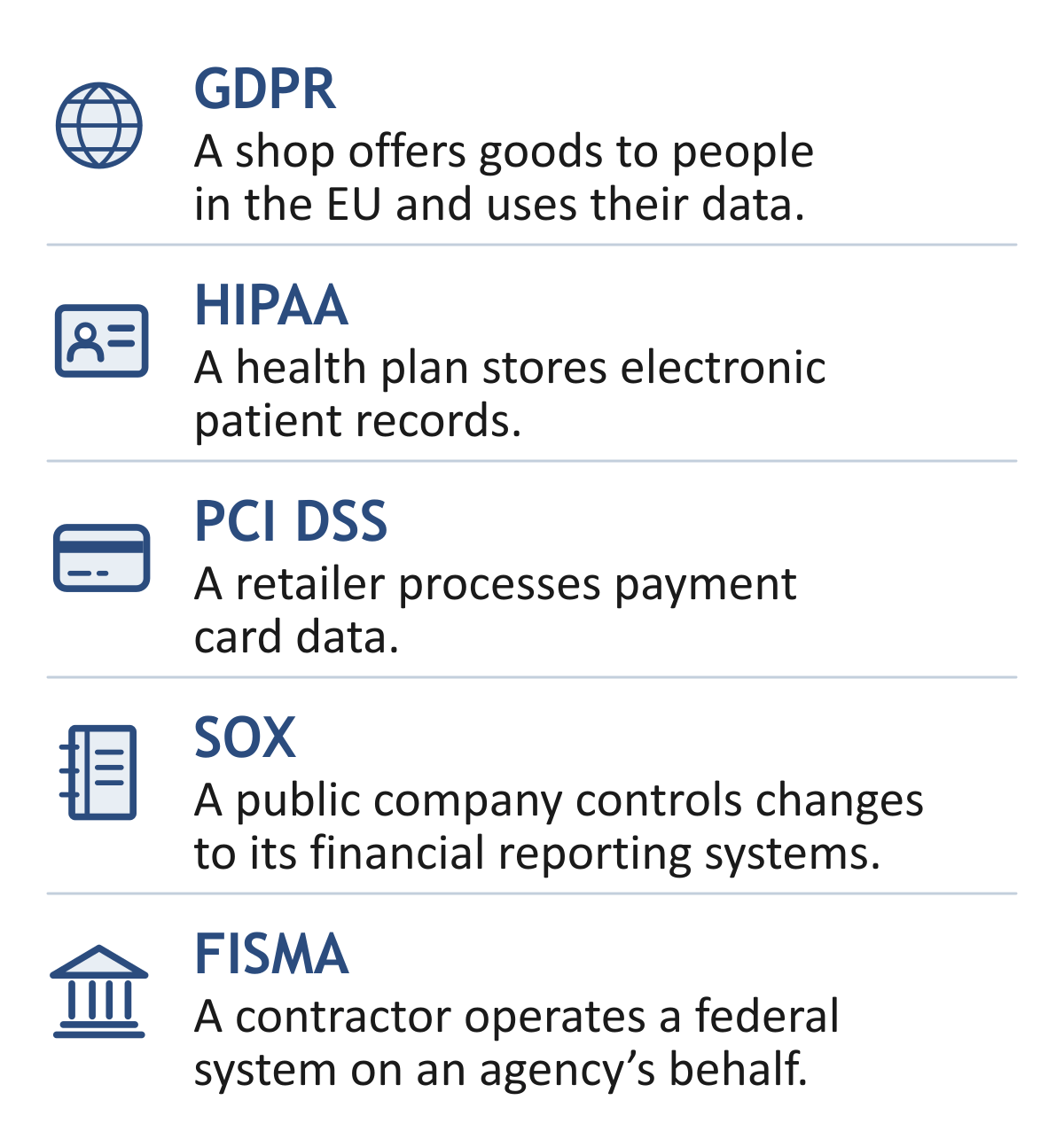
Figure 15.2: A single organization can appear in several rows. Follow the data, the service and the organization’s role to identify which requirements to investigate.
Text description of Figure 15.2
The General Data Protection Regulation (GDPR) can apply when a shop offers goods to people in the European Union and processes their personal data in connection with that offer. The Health Insurance Portability and Accountability Act (HIPAA) Security Rule covers a health plan’s electronic protected health information. For a retailer processing card payments, the Payment Card Industry Data Security Standard (PCI DSS) applies as an industry standard. The Sarbanes-Oxley Act (SOX) concerns a public company’s controls over financial reporting. The Federal Information Security Modernization Act (FISMA) includes federal systems that contractors operate on an agency’s behalf.
15.3 Compliance vs. Security: A Critical Distinction
An important distinction exists between compliance (meeting regulatory or policy requirements) and security (actual protection against attacks).
The Compliance Problem
An organization can be fully compliant with regulatory requirements but remain vulnerable. Example:
PCI DSS requires quarterly vulnerability scanning. An organization performs the required scans quarterly, documenting compliance. However:
- Vulnerabilities are discovered and not remediated (compliance satisfied, security exposed)
- Scanning tool has weak detection capabilities, missing common vulnerabilities (compliance satisfied through lack of detection, security exposed)
- Systems are patched only after audit, leaving unpatched systems vulnerable between audits (compliance satisfied per schedule, security exposed)
The organization is compliant (performing required activities) but insecure (vulnerable to attack).
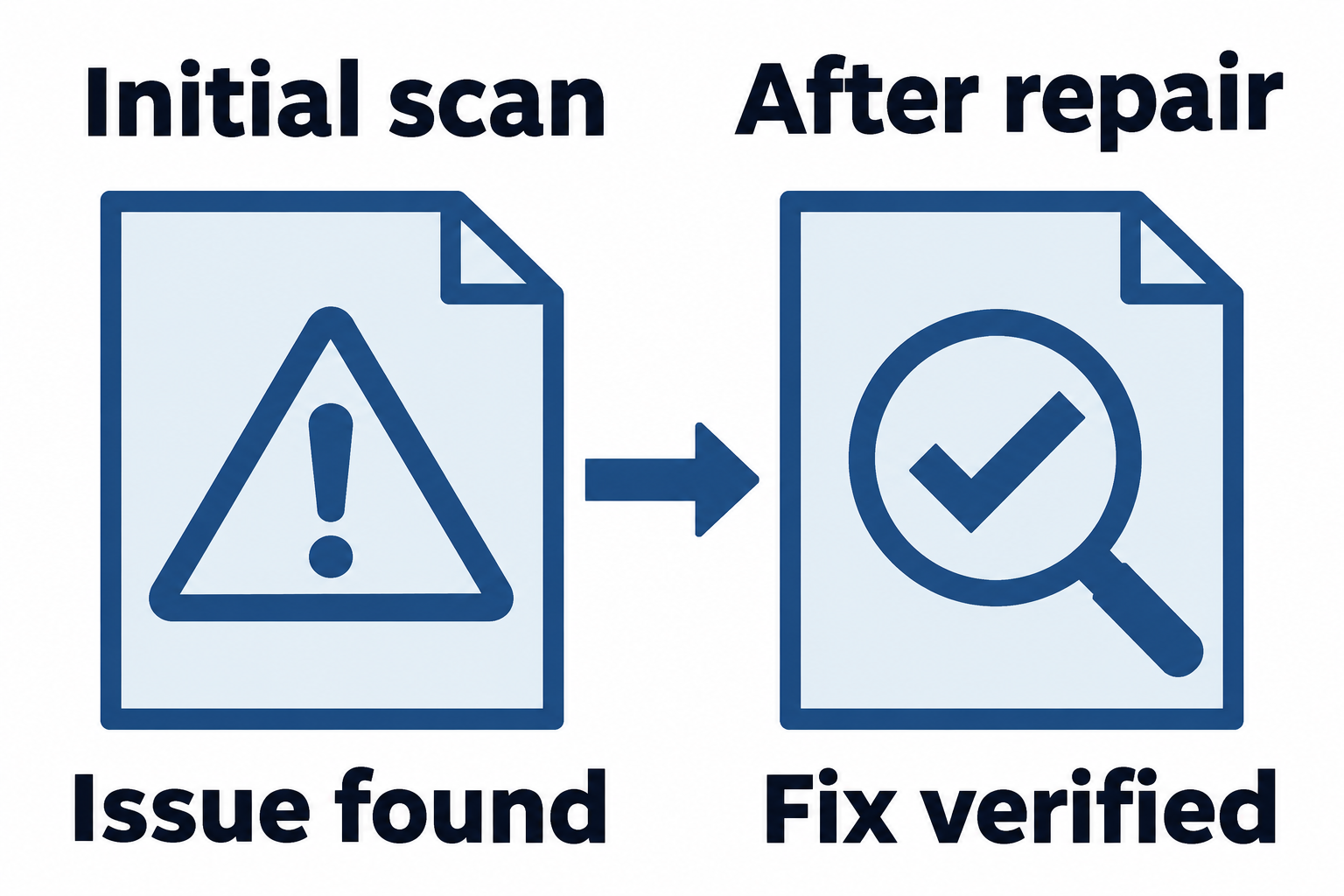
Figure 15.3: The two reports answer different questions. The first records what the scanner detected. The second tests whether the repair worked.
Text description of Figure 15.3
The first report marks a detected issue with a warning triangle. After the team repairs it, a new scan checks that same issue. A completed scan documents one assessment activity. Determining payment-card compliance requires evidence for the other applicable requirements as well.
The Security-Beyond-Compliance Approach
Effective organizations implement security controls that exceed compliance requirements. Example:
- PCI DSS requires quarterly vulnerability scanning. The organization implements monthly vulnerability scanning.
- PCI DSS requires annual penetration testing. The organization implements quarterly penetration testing.
- PCI DSS requires TLS 1.2 minimum. The organization requires TLS 1.3 for all new implementations.
The organization exceeds compliance baseline, reducing actual risk beyond minimum regulatory requirements.
Cost-Benefit Trade-off
Security investments should consider both compliance requirements and actual risk:
- High-risk, high-compliance: System with customer credit card data (compliance critical, security critical). Invest heavily.
- High-risk, low-compliance: System with internal research data (compliance not required, but business-critical). Invest based on business value, not compliance.
- Low-risk, high-compliance: Test system subject to compliance audit (compliance required, but low business risk). Meet minimum compliance requirements.
Effective governance aligns security investment with both regulatory requirements and business risk.
15.4 Risk Communication to Stakeholders
Security professionals must communicate technical findings to non-technical executives and board members. This requires translating technical language into business language, quantifying impact, and focusing on business risk rather than technical details.
Translating Technical Findings into Business Language
A technical finding might be:
SQL injection vulnerability in user registration page (/register.php,
line 47, $username parameter not properly escaped) allows database access.
Attacker can execute arbitrary SQL commands against the database,
potentially accessing user accounts, authentication credentials, and
personal information.
Translated to business language:
FINDING: User Registration Page Vulnerability
IMPACT: The user registration feature is vulnerable to a SQL injection
attack. An attacker could exploit this to:
- Access user account database containing 500,000 customer records
- Steal customer names, email addresses, and password hashes
- Access customer payment information (names, last 4 digits of cards,
  billing addresses)
- Potentially modify account data (changing customer passwords or
  elevating privileges)

LIKELIHOOD: High. SQL injection is a well-known attack technique.
Automated tools can scan for SQL injection vulnerabilities.

TIMELINE: This vulnerability likely affects 50%+ of web applications
using vulnerable patterns. Exploitation attempts are common.

RISK: Very High. Combined business impact + likelihood + timeline
Focus on what the attacker can do and what data/systems are affected. Avoid technical details unless the audience requests them.
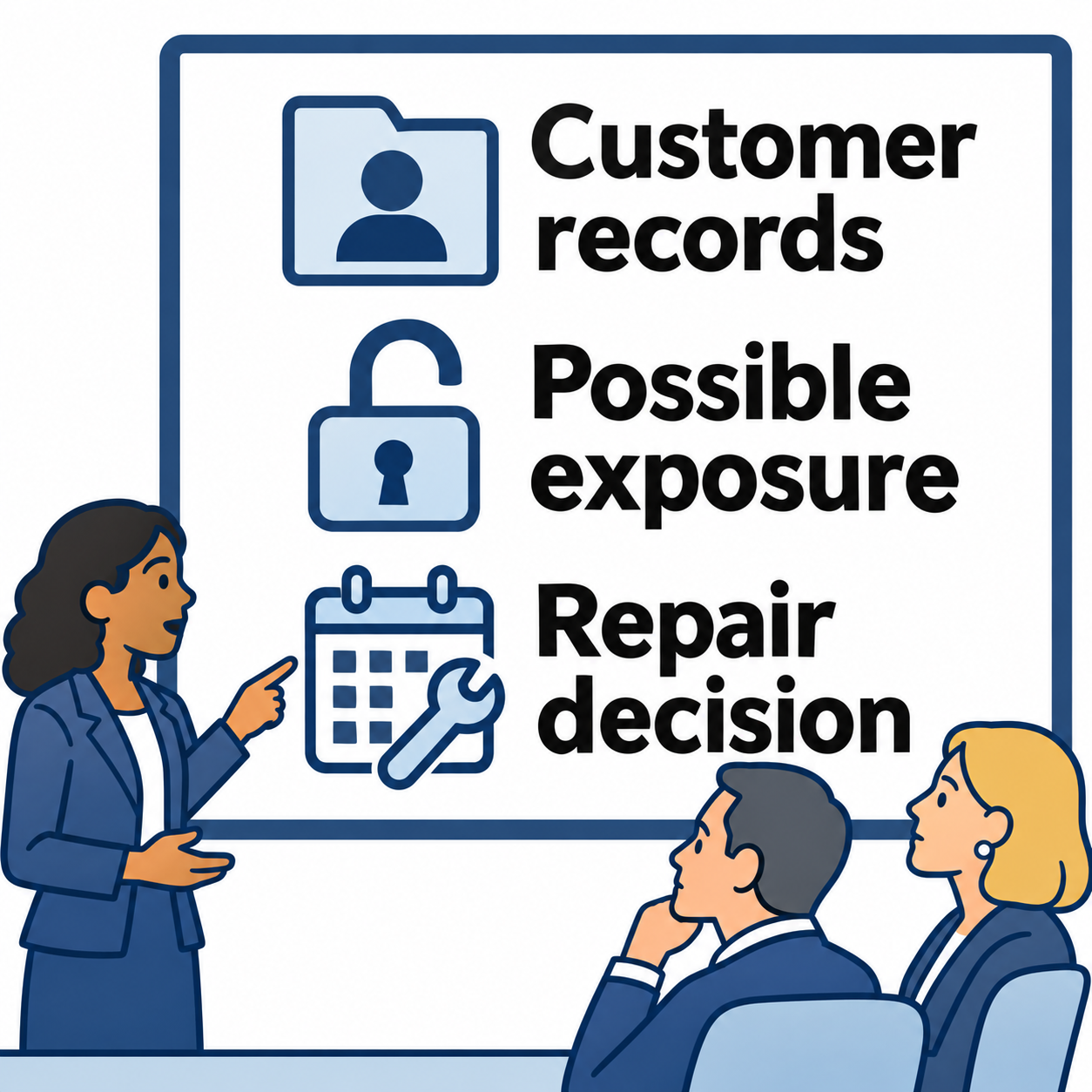
Figure 15.4: Leaders can weigh the cost and timing of a repair against the harm that exposure of customer records could cause.
Text description of Figure 15.4
The analyst identifies the customer records that the registration feature can reach. She explains that unauthorized access is possible and distinguishes that possibility from a confirmed disclosure. Leaders can then weigh the exposure against the cost and timing of a repair.
Quantifying Financial Risk
Business stakeholders understand financial risk. Security findings should quantify impact. Example:
FINDING: Unencrypted Customer Database
TECHNICAL: Customer database containing 100,000 records stored
unencrypted on production server. No encryption key, no access controls
limiting database access.

BUSINESS QUANTIFICATION:
- Customers affected: 100,000
- Data per customer: Email address, phone number, home address, purchase
  history
- Regulatory fines (GDPR, if EU residents included): $4,000,000-20,000,000
- Notification costs: $50-100 per affected customer = $5,000,000-10,000,000
- Lost customer trust (estimated 5-15% customer churn): $2,000,000-6,000,000
- Reputational damage (estimated 6-month brand impact): $1,000,000-3,000,000
- Total estimated cost: $12,000,000-39,000,000

PROBABILITY: If data is stored unencrypted on production server, probability of breach is estimated at 25-40% within 2 years (based on breach statistics and threat landscape).

EXPECTED LOSS: $3,000,000-15,600,000 (probability × impact)

REMEDIATION COST: Implement database encryption: $50,000-100,000
(software, implementation, testing)

RECOMMENDATION: Remediation is cost-effective. Expected loss far exceeds
remediation cost. Implement database encryption immediately.
This approach translates technical findings into business risk metrics that executives use to make decisions.
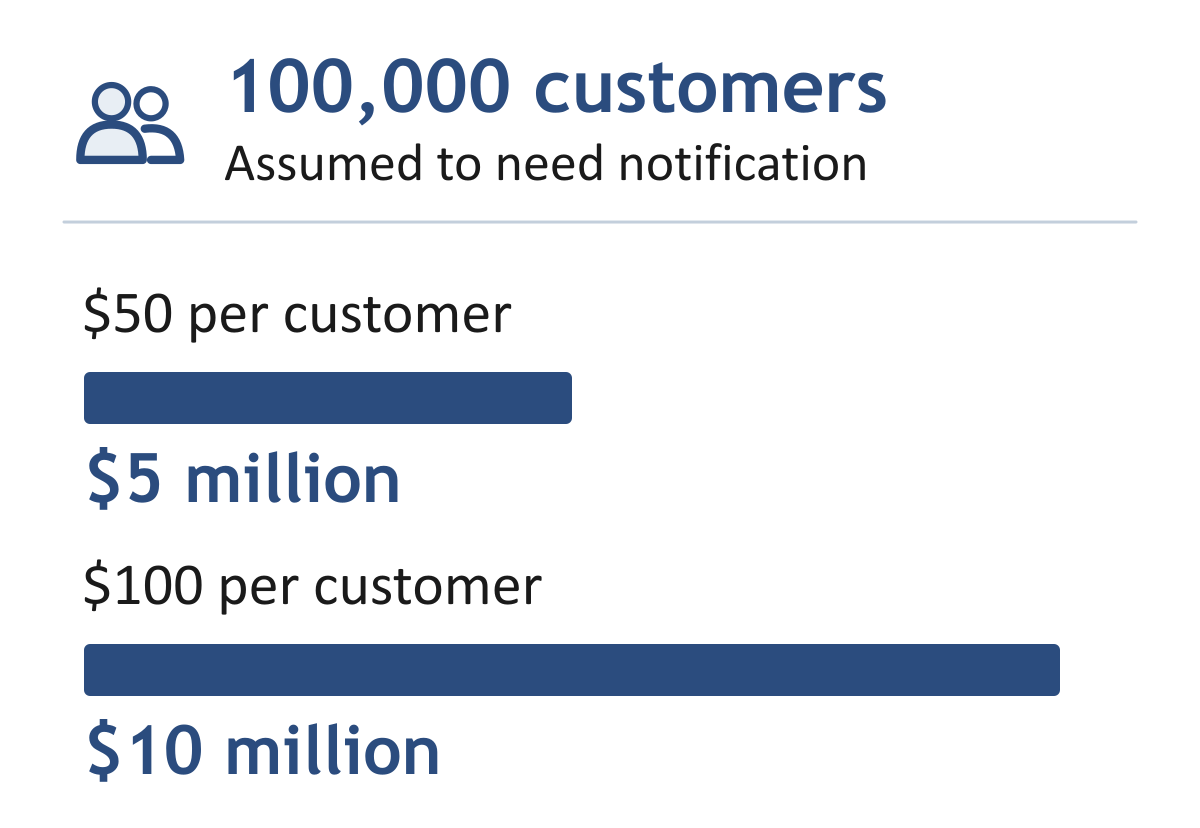
Figure 15.5: Doubling the assumed cost per person doubles the notification budget. Both estimates cover the same 100,000 customers.
Text description of Figure 15.5
Each bar shows an illustrative total for one cost category. Multiplying 100,000 people by $50 gives $5 million. Multiplying the same count by $100 gives $10 million. Those unit costs are assumptions from the scenario. An actual estimate would use the organization’s affected population and delivery costs.
Risk Communication Matrix
Different stakeholders need different information:
| Stakeholder | Focus | Language | Detail Level |
|---|---|---|---|
| Board of Directors | Business impact, strategy | Financial impact, competitive risk | High-level summary |
| CFO | Cost implications | Remediation cost vs. loss exposure | Quantified financial |
| CIO | Implementation feasibility | Timeline, resource requirements | Technical approach |
| Security team | Technical details | Exploit techniques, mitigation steps | Detailed technical |
| Legal counsel | Regulatory implications | Notification requirements, liability | Regulatory reference |
15.5 Security Awareness Training Programs
Security awareness training educates employees about security threats and their responsibilities in protecting organizational assets. Awareness training is a required control in PCI DSS, HIPAA, GDPR, and most industry frameworks.
Program Design and Components
Effective awareness programs include:
Baseline training: All employees receive foundational security training covering:
- Password security (strong passwords, not sharing, not reusing)
- Phishing recognition (how to identify phishing emails, what to do with suspicious emails)
- Incident reporting (how to report security incidents, whom to contact)
- Data classification (what data is sensitive and requires protection)
- Clean desk policy (not leaving sensitive information visible)
- Acceptable use policy (authorized uses of company systems)
Baseline training should be required for all employees on hire and refreshed annually. Duration: 30-60 minutes.
Role-specific training: Employees in specific roles receive deeper training:
- Developers: Secure coding practices, input validation, SQL injection prevention, cross-site scripting prevention, cryptography basics
- Database administrators: Data protection, encryption implementation, access control, audit logging, backup security
- System administrators: Patch management, vulnerability management, configuration hardening, account management
- Finance personnel: Fraud prevention, wire transfer security, approval procedures, incident reporting
Duration: 1-2 hours per role annually.
Targeted training: Employees in high-risk roles receive additional training:
- Employees with administrative privileges
- Employees with database access
- Finance personnel handling large transactions
- Executives with access to sensitive strategic information
Duration: 1-2 hours per quarter.
Continuous education: Regular updates on:
- Emerging threats (new malware, attack techniques, data breaches in industry)
- Policy changes
- Lessons learned from security incidents
- Industry news relevant to organization (ransomware attacks affecting similar organizations, etc.)
Frequency: Monthly newsletter, quarterly training updates.
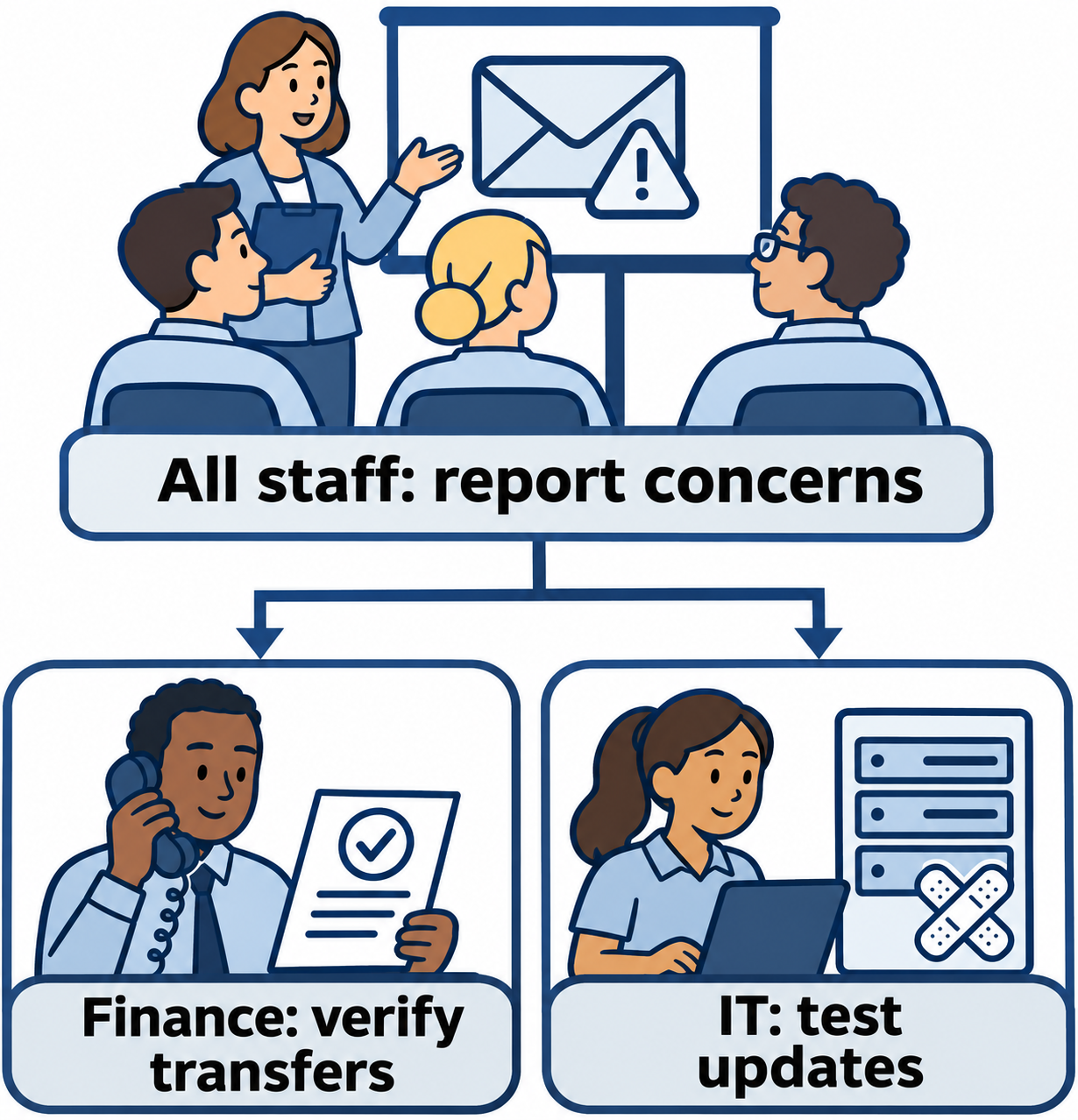
Figure 15.6: A common reporting procedure gives every employee a starting point. Role-specific practice addresses decisions that employees can make in their own jobs.
Text description of Figure 15.6
A trainer shows a suspicious message to a group of employees. Two branches illustrate additional practice. A finance employee verifies a payment request, and an information technology (IT) employee tests a software update. Both employees still use the organization’s reporting procedure.
Phishing Simulations
Organizations often conduct phishing simulations where employees are sent fake phishing emails to test awareness. Simulations might include:
- An email appearing to be from the CEO requesting urgent password reset
- An email appearing to be from IT requesting credential verification
- An attachment with a misleading filename (resume.pdf.exe disguised to look like a PDF)
Results are tracked:
- Click-through rate: What percentage of employees clicked the link?
- Credential submission rate: How many employees entered credentials?
- Report rate: How many employees reported the phishing email to IT?
Employees who fail (click malicious link, submit credentials) receive targeted phishing awareness training.
Awareness Program Metrics
Effectiveness is measured through:
- Training completion rates: Percentage of employees completing required training (target: 100%)
- Phishing simulation results: Click-through rates should decrease over time as awareness improves (target: below 5% after training)
- Reported security incidents: Employees should report suspicious activity. Baseline establishes expected report rate; increases indicate awareness improvement (target: increases over time)
- Security culture surveys: Annual surveys measure employee understanding of security and perception of management commitment to security
- Incident trends: Security incidents caused by human error (phishing, credential misuse) should decrease following awareness programs
15.6 Change Management and Security Integration
Change management is the process of controlling changes to IT systems. Change management prevents operational disruptions and, importantly, prevents changes that introduce security vulnerabilities.
Change Control Process
Security-aware change management includes:
Change request and approval: Before any change occurs, a change request is documented including:
- Description of the change
- Business justification
- Technical details (what will be modified)
- Rollback plan (how to revert if the change causes problems)
- Testing completed (what verification has occurred)
- Risk assessment (does the change introduce security vulnerabilities?)
The change request is reviewed by change advisory board (CAB) including IT operations, security, and business representatives.
Security impact assessment: For each change, security must assess:
- Does the change increase network exposure (new open ports, new systems accessible from internet)?
- Does the change reduce access controls (more permissive credentials, broader user access)?
- Does the change disable security monitoring (disable logging, disable antivirus)?
- Does the change introduce new vulnerabilities (new software with known vulnerabilities, deprecated dependencies)?
High-risk changes (production system changes, changes affecting security controls) require additional scrutiny.
Change scheduling: Changes are scheduled during maintenance windows to minimize business impact. Security and IT operations coordinate to ensure:
- Changes to critical systems are scheduled together (related changes completed in single maintenance window)
- Conflicting changes are not scheduled simultaneously
- Adequate time is available for rollback if needed
- Monitoring is active during change
Change implementation and testing: Changes are implemented in staging environment first, thoroughly tested, and verified to not introduce vulnerabilities. Only after staging validation does the change move to production.
Post-change validation: After the change is implemented:
- Verify the change accomplished intended objective
- Verify no unintended side effects occurred
- Verify security monitoring is functioning correctly
- Document the change in configuration management database (CMDB)
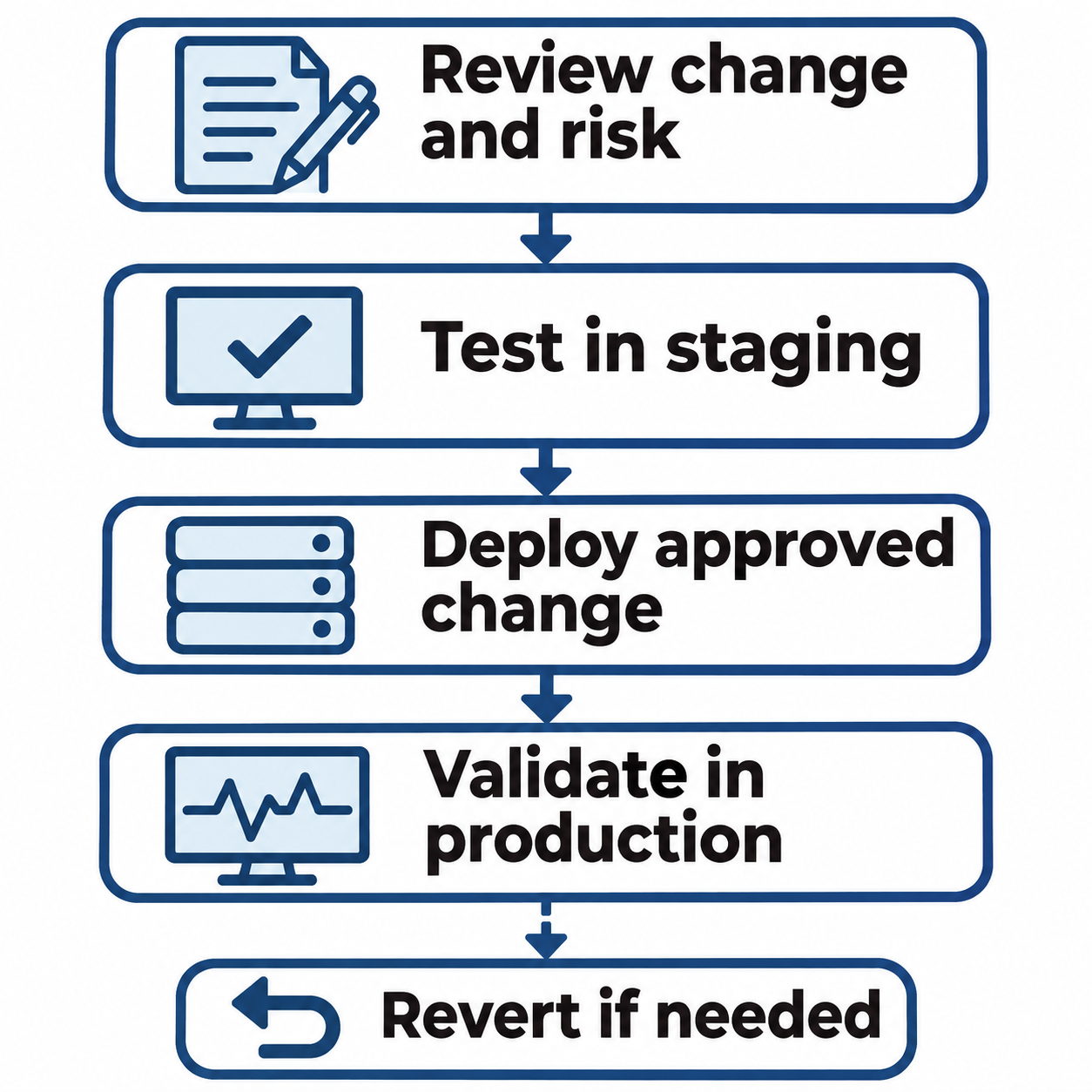
Figure 15.7: A maintenance window gives the team time to check the live service and restore its previous state if validation fails.
Text description of Figure 15.7
The reviewer considers the proposed change, its security impact and the rollback plan. The team tests in staging, a separate environment that resembles the live system. After approval it deploys to production, the system people actually use. The team verifies the intended result and checks monitoring. A dashed arrow leads to the option to revert if those checks reveal a problem.
15.7 Third-Party Risk Management and Supply Chain Security
Organizations increasingly outsource functions to third parties (cloud providers, managed security service providers, development vendors). Third-party risk management is critical: a breach at a vendor handling your data is your breach.
Vendor Assessment Framework
Before engaging a vendor, organizations should conduct security assessment:
Security controls assessment: What security controls does the vendor implement?
- Access controls (who can access customer data, how is access limited)
- Encryption (is customer data encrypted in transit and at rest)
- Network segmentation (is customer data isolated from other customers)
- Incident response capabilities (how does vendor respond to security incidents)
- Personnel vetting (what background checks and vetting does vendor conduct on personnel)
- Physical security (where is data stored, what physical access controls are in place)
Assessment methods:
- Vendor security questionnaire (detailed questions about controls)
- Third-party audit reports (SOC 2 Type II audit is gold standard, demonstrating independent verification of controls)
- On-site assessment (for high-risk vendors, visit facility and inspect controls)
- Reference checking (contact other customers of the vendor)
Compliance verification: Is the vendor compliant with relevant regulations?
- HIPAA compliance (if handling health information)
- PCI DSS compliance (if handling payment card data)
- SOC 2 Type II certification (demonstrates controls over availability, processing integrity, security, confidentiality)
- ISO 27001 certification (demonstrates information security management system)
Incident response capabilities: How does the vendor respond to security incidents?
- Incident response procedures (documented procedures for handling incidents)
- Detection capabilities (tools to identify security incidents affecting customer data)
- Notification procedures (timeframe for notifying customers of incidents)
- Forensics capabilities (can vendor conduct root cause analysis)
- Business continuity (backup sites, failover capabilities, RTO/RPO specifications)
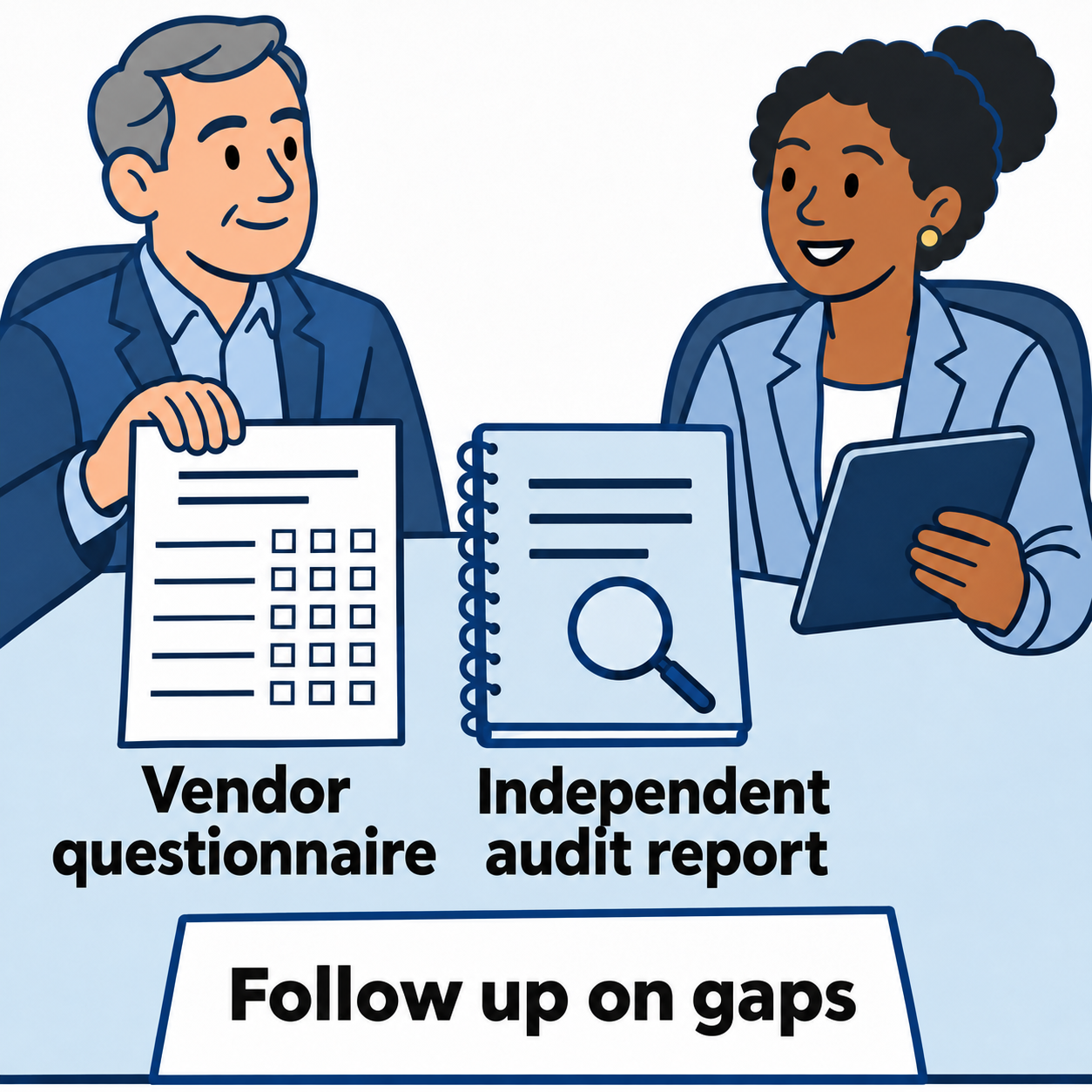
Figure 15.8: For a cloud backup purchase, a reviewer can check whether the audit covered the service that will actually hold the organization’s records.
Text description of Figure 15.8
The vendor describes its controls in a questionnaire. The reviewer checks which systems and dates the independent auditor examined and reads the test results. If the report omits the backup service or reports a problem with access controls, the reviewer asks for evidence that addresses the gap.
Service Level Agreements (SLAs)
Service Level Agreements define the vendor's obligations including:
Availability: "Vendor will maintain 99.9% uptime, measured monthly. Downtime exceeding monthly threshold results in service credits."
Security obligations: "Vendor will implement AES-256 encryption for customer data at rest and TLS 1.2+ for data in transit. Vendor will disable default credentials and implement access controls limiting vendor personnel access to customer data."
Incident response: "Vendor will notify customer of security incidents within 24 hours of detection. Vendor will provide incident reports within 5 business days including timeline, scope, root cause, and remediation actions."
Data retention and deletion: "Upon contract termination, vendor will securely delete all customer data within 30 days of written request. Vendor will provide written certification of deletion."
Audit rights: "Customer has right to audit vendor security controls annually and conduct ad-hoc audits upon 15 days notice."
Penalties: SLAs should include penalties for breach:
- Failure to meet availability SLA: 5-10% service credit
- Failure to notify of incident within SLA timeframe: 25% monthly fee credit
- Failure to implement required security controls: contract termination right
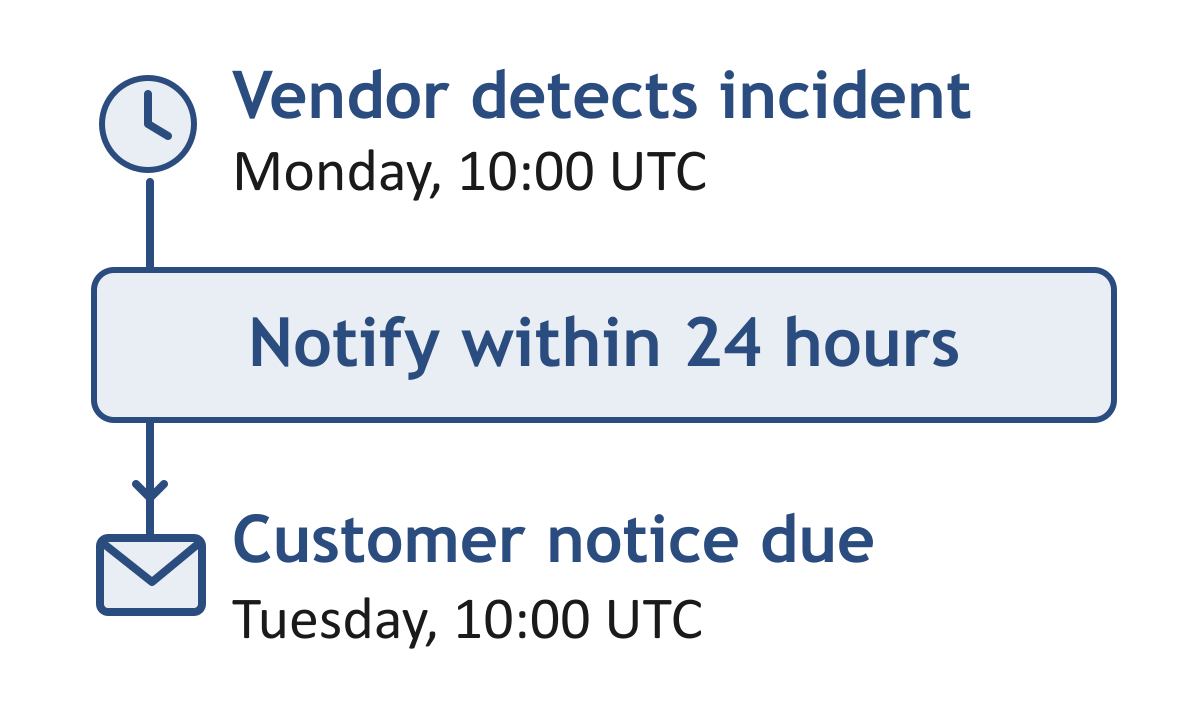
Figure 15.9: The example service level agreement starts the vendor’s notice clock at detection. The customer can compare the detection and notification timestamps.
Text description of Figure 15.9
The vendor detects an incident at 10:00 on Monday in Coordinated Universal Time (UTC). This contract requires the vendor to notify the customer within 24 elapsed hours, so the latest timely notice is 10:00 UTC on Tuesday. The initial notice and the later investigative report serve different purposes.
Supply Chain Security
Supply chain security addresses risks introduced through software dependencies and third-party libraries. An organization using a software library with a vulnerability inherits that vulnerability.
Supply chain risks include:
- Vulnerable dependencies: Open-source libraries may contain known vulnerabilities. Organizations must track dependencies and update to patch vulnerable versions.
- Compromised dependencies: Supply chain attacks target popular libraries, inserting malicious code that affects all downstream projects. The SolarWinds Orion incident (2020) compromised thousands of organizations through a software supply chain attack.
- License compliance: Using software with restrictive licenses may violate contractual obligations or expose the organization to legal risk.
Mitigation strategies:
- Software bill of materials (SBOM): Document all software dependencies and versions
- Dependency scanning: Use tools like Snyk, Dependabot, or Sonatype Nexus to scan for vulnerable dependencies and alert when vulnerabilities are disclosed
- Vendor assessment: Assess third-party software vendors' security practices and vulnerability response procedures
- Code review: Review open-source dependencies for suspicious behavior before integrating into projects
- Update procedures: Establish procedures for promptly updating vulnerable dependencies when patches are available
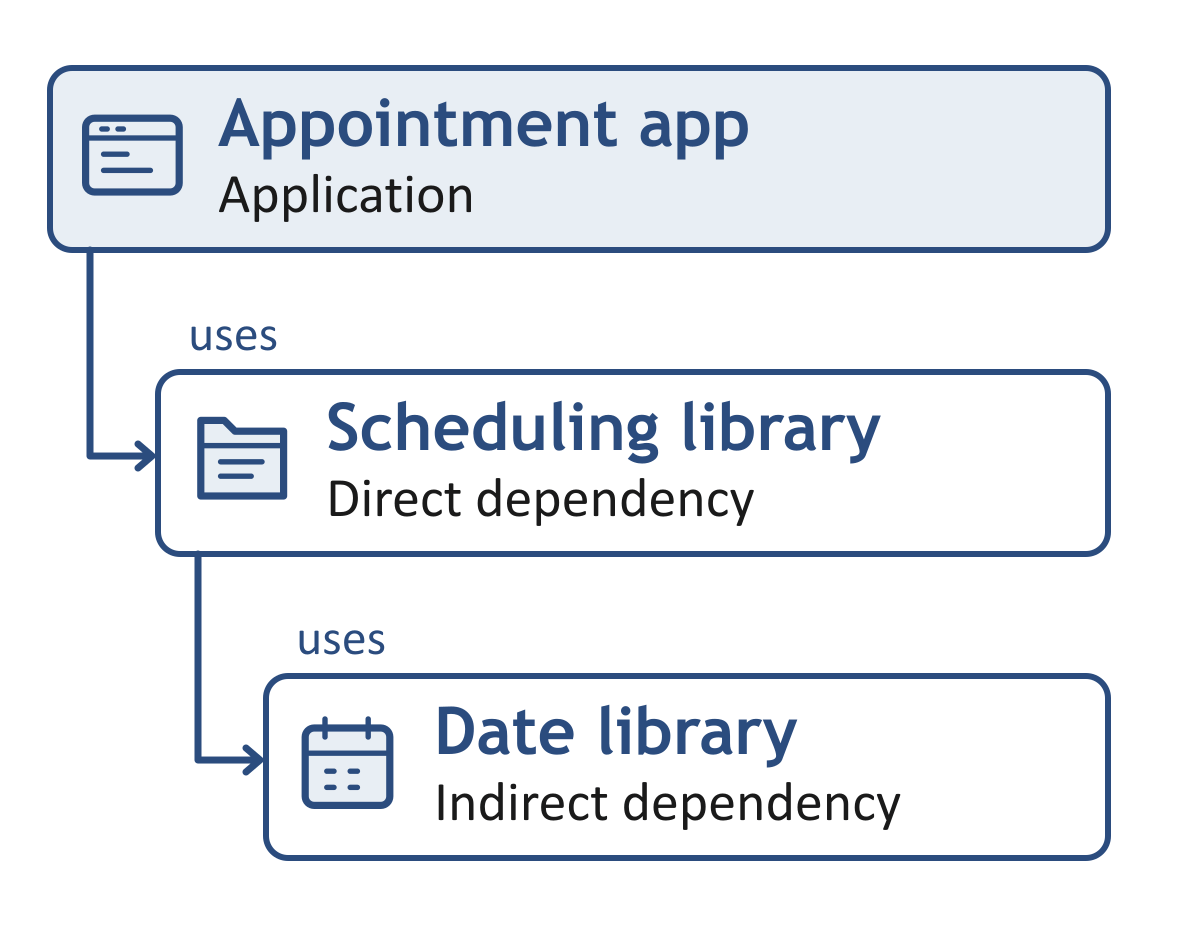
Figure 15.10: The appointment team can use its software bill of materials, an inventory of components and versions, to identify where an affected date library appears.
Text description of Figure 15.10
The first arrow connects the application to the scheduling library it uses directly. The second connects the scheduling library to a date library. If a vendor advisory names a version of the date library, the team can check the inventory and inspect the dependency path before deciding whether the application needs an update.
15.8 Ethics in Cybersecurity and Responsible Disclosure
Responsible disclosure is the practice of notifying vendors of security vulnerabilities before publicly disclosing them. This gives vendors time to develop and release patches before attackers widely exploit the vulnerability.
Responsible Disclosure Process
When a security researcher discovers a vulnerability:
- Responsible party notification: Contact the vendor through proper channels (security contact, responsible disclosure program)
- Provide details: Supply sufficient information for the vendor to understand and reproduce the vulnerability
- Grace period: Allow 90 days (industry standard) for the vendor to develop and release a patch
- Coordinate disclosure: Work with the vendor on a coordinated disclosure date
- Public disclosure: On the agreed date, publicly disclose the vulnerability (if not yet patched, most vendors' policies allow publication after 90 days even if patch is not released)
Responsible disclosure protects organizations from widespread exploitation while allowing vendors time to prepare patches.
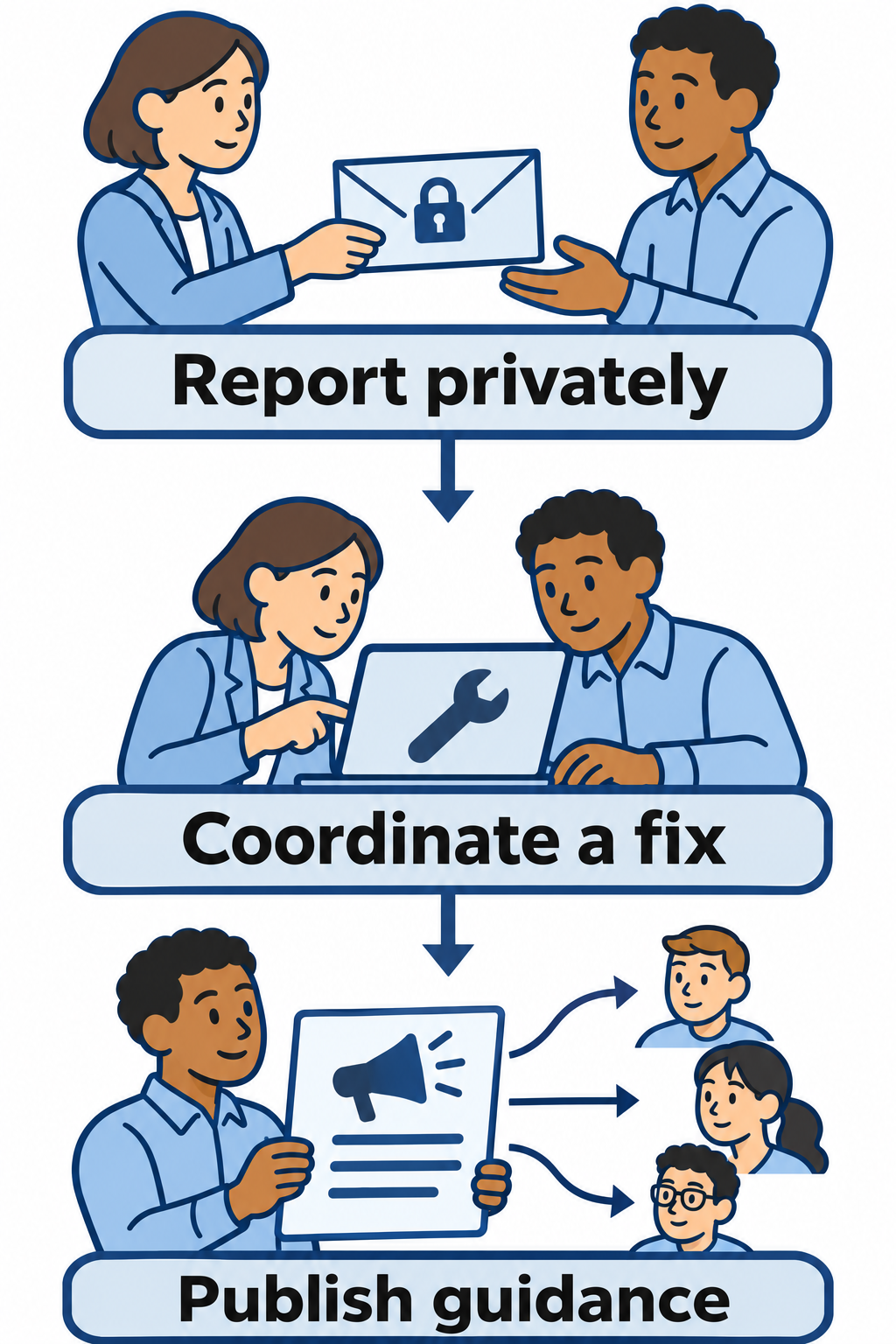
Figure 15.11: The researcher and vendor discuss timing so users can act on a fix or a temporary protective measure when they learn of the issue.
Text description of Figure 15.11
First the researcher contacts the vendor through its security reporting channel. The parties assess the report and coordinate a fix or temporary protective measure. They discuss when to release guidance and what affected users should do. The timing depends on the case and the applicable disclosure policy.
Professional Codes of Conduct
Organizations like (ISC)², SANS, and IEEE publish codes of conduct that guide ethical behavior in security. Key principles:
- Act honestly and ethically: Honesty and ethical behavior form the foundation of the profession
- Advance security: Work toward advancing security of systems and networks
- Protect data and privacy: Respect the privacy of others and protect their data
- Maintain competence: Stay current with technology and security knowledge
- Report violations appropriately: Report security violations through proper channels, not through public disclosure or vigilantism
15.9 Putting It Together: Healthcare Governance and Compliance Scenario
A healthcare organization implements a comprehensive security governance program balancing HIPAA compliance requirements with strategic security objectives.
Analyst Perspective
Effective governance balances security requirements, regulatory compliance, and business objectives. Over-regulation stifles innovation; under-regulation creates risk. Healthcare organizations operate in a high-compliance, high-security environment where balance is critical.
Implementation Steps
1. Establish governance structure
The organization develops:
- Policies: "All patient health information (PHI) shall be protected with encryption, access controls, and audit logging"
- Standards: "PHI at rest shall use AES-256 encryption; PHI in transit shall use TLS 1.2+. Encryption keys shall be managed in a Hardware Security Module"
- Procedures: Step-by-step instructions for encryption implementation in specific systems (Epic EHR system, Cerner databases, etc.)
- Baselines: All systems must implement CIS benchmarks for their operating systems. All network devices must have default credentials changed and be managed through a centralized system
2. Implement regulatory compliance
The organization ensures compliance with:
- HIPAA requirements: Administrative safeguards (security officer designated, risk assessments conducted), physical safeguards (data center access restricted, workstation policies established), technical safeguards (encryption implemented, access controls configured, audit logging enabled)
- State privacy laws: Many states have additional privacy requirements beyond HIPAA. The organization implements notification procedures for breaches affecting state residents
- Standard industry practices: The organization targets ISO 27001 certification, demonstrating independent validation of information security management system
3. Communicate risks to leadership
A technical finding: "Encryption not enabled on legacy EMR database (system deprecated 2025, scheduled for retirement)"
Business communication to CFO and Board:
RISK FINDING: Unencrypted Patient Health Records

IMPACT: The legacy EMR database stores 500,000 patient health records
in unencrypted form. The system is deprecated but remains operational
for historical data access.

REGULATIONS: HIPAA requires encryption of electronic protected health
information (ePHI). Unencrypted storage is HIPAA violation.

FINANCIAL EXPOSURE:
- HIPAA civil penalties: $100-$50,000 per violation, potentially
  $1.5M+ annually
- Breach notification (if database is breached): Notification costs
  $500,000-$2,500,000; regulatory investigation costs $200,000+
- Lost patient trust: Estimated 5-10% patient volume loss = $500,000-1M
- Reputational damage: Estimated 6-12 month impact = $250,000-500,000
- Estimated total exposure: $1.5M-5.5M

TIMELINE: Database is scheduled for retirement in 18 months. Until
retirement, database remains unencrypted.

MITIGATION OPTIONS:
Option 1 (Recommended): Implement encryption on legacy database
  - Cost: $30,000-50,000
  - Timeline: 4 weeks
  - Benefit: Achieves HIPAA compliance, reduces financial exposure

Option 2: Accelerate database retirement
  - Cost: $200,000-300,000 (migrate historical data, retire legacy system)
  - Timeline: 12 weeks
  - Benefit: Achieves HIPAA compliance, eliminates legacy system maintenance

Option 3: Accept risk, document compliance gap
  - Cost: $0 (no mitigation)
  - Risk: HIPAA violations, potential breach
  - NOT RECOMMENDED

RECOMMENDATION: Implement Option 1 (encryption). Cost is minimal relative
to financial exposure. Achieves HIPAA compliance with minimal disruption.
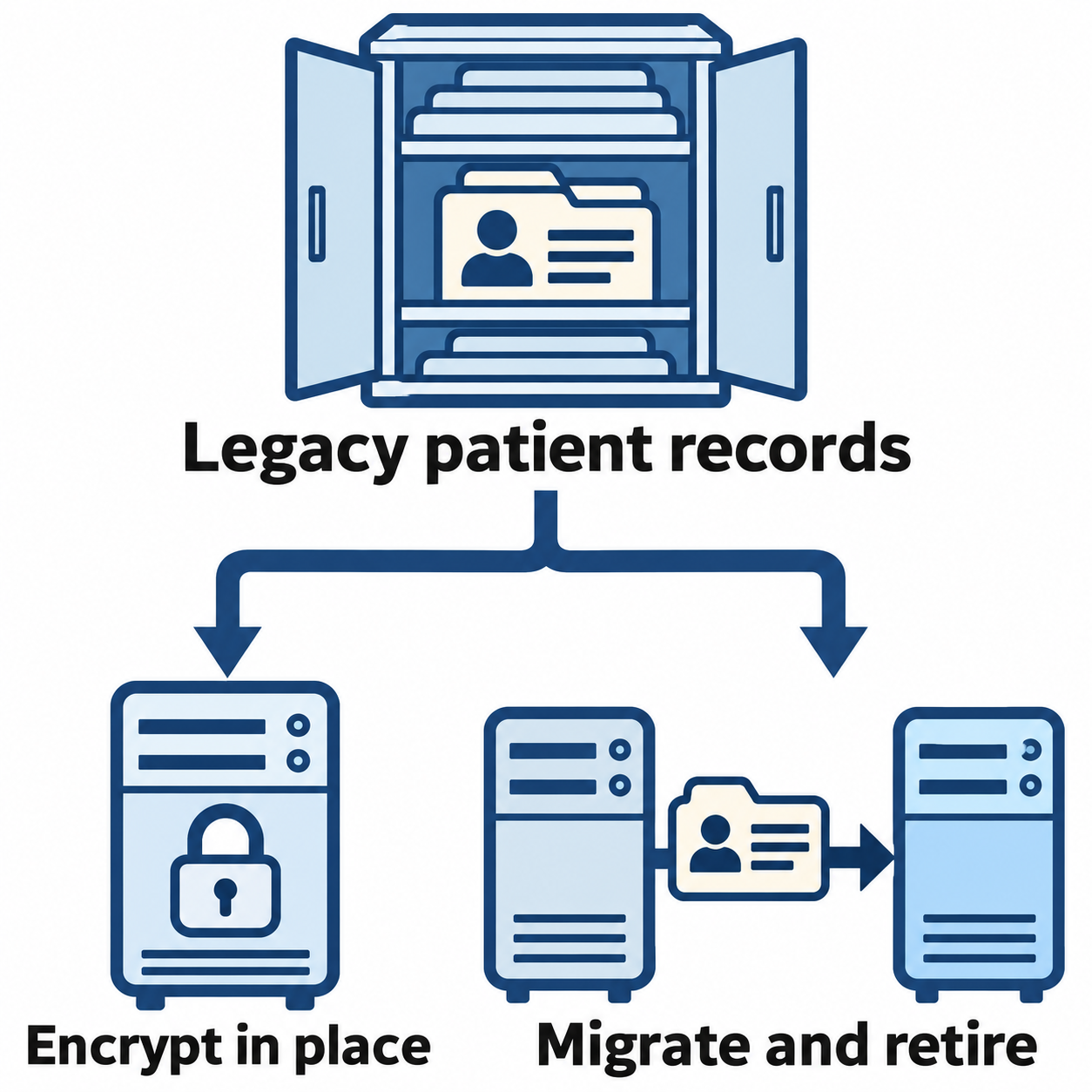
Figure 15.12: Both proposed changes must preserve authorized access to historical records. The organization can compare how long each option leaves the legacy system exposed.
Text description of Figure 15.12
Encryption in place protects stored records while the old system continues to serve authorized users. Migration transfers the records to a replacement. The team checks their integrity and verifies that staff can retrieve them before retiring the original. Leadership can compare cost, timing and disruption alongside the other safeguards that protect patient information.
4. Manage third-party risk
The organization conducts security assessment of cloud provider handling PHI backups:
- Request SOC 2 Type II audit report (demonstrates independent verification of controls)
- Conduct vendor security questionnaire covering encryption, access controls, incident response
- Require SLA guaranteeing: encryption of PHI, redundancy, 24-hour incident response, annual audit rights
5. Train employees
The organization implements:
- HIPAA awareness training for all staff: Annual training covering HIPAA privacy and security requirements, PHI handling, breach notification
- Phishing simulations: Healthcare employees are high-value targets for social engineering. Simulations test vulnerability to phishing, targeting healthcare staff specifically
- Role-specific training for IT/security staff: Monthly training on emerging threats, incident response procedures, security control implementation
Chapter Summary
- Security governance structures (policies, standards, procedures, guidelines, baselines) establish organizational direction and ensure consistent implementation across the organization.
- Policies are high-level direction approved by leadership; standards specify technical requirements; procedures provide step-by-step implementation; guidelines offer recommendations.
- Regulatory frameworks (GDPR, HIPAA, PCI DSS, SOX, FISMA) impose mandatory security requirements depending on industry, data types, and geography.
- GDPR applies to any organization processing EU resident data; requires breach notification within 72 hours; enforces rights to access, deletion, and portability.
- HIPAA applies to healthcare organizations; requires administrative, physical, and technical safeguards; requires business associate agreements.
- PCI DSS applies to credit card processors; requires encryption, vulnerability scanning, penetration testing, and access controls.
- SOX applies to public companies; requires documentation and testing of IT controls over financial reporting.
- FISMA applies to federal agencies and contractors; requires NIST-compliant security controls and continuous monitoring.
- Compliance means meeting regulatory requirements; security means protecting against actual attacks. Organizations can be compliant but insecure.
- Effective organizations exceed compliance baselines, implementing security controls that go beyond minimum regulatory requirements.
- Risk communication requires translating technical findings into business language, quantifying financial impact, and focusing on business risk rather than technical details.
- Security awareness training includes baseline training for all employees, role-specific training for technical staff, and targeted training for high-risk roles.
- Phishing simulations test employee susceptibility to phishing; results guide targeted awareness training.
- Change management prevents changes that introduce security vulnerabilities through change requests, security impact assessments, and post-change validation.
- Third-party risk management assesses vendor security controls, compliance status, and incident response capabilities before engagement.
- Service level agreements define vendor obligations including availability, encryption, incident response, and audit rights.
- Supply chain security addresses risks from vulnerable software dependencies; mitigations include software bill of materials, dependency scanning, and vendor assessment.
- Responsible disclosure practices protect organizations by allowing vendors time to patch vulnerabilities before public disclosure.
- Professional codes of conduct establish ethical principles guiding security professionals' behavior.